Acknowledgements
Our profound thanks go to those who paved the way: foremost, Olga R., who transported a fragile, beloved musical object from Bucharest to Poland and then to Australia and inspired this project, and Yehuda Eismann and Flora Romm, whose dedication in Bucharest enabled the voices of survivors to resound into the future.
Our thanks extend to the many generous family members who shared memories and histories: the family of Olga R.; Oren Levin, Mor Levin-Weisz and Rotem Levin (grandchildren of Yehuda Eismann and Flora Romm); Fredy and Sofi Flaysher (eldest son and wife of Ayzik Flaysher); Shlomo and Jacob Sambol (sons of Volf Sambol); Hadas Kalderon (granddaughter of Avrom Sutzkever); Zola Shuman (niece of Leyb Rozental); and Liliane Cordova-Kaczerginski (daughter of Szmerke Kaczerginski). It was our honour to meet Professor Alex Tamir (z”l), the sole surviving contributor to the songbook, and we are grateful to Professor Yoram Eden and Dr Dror Semmel of the Eden Tamir Center for assisting us with images. We also had the honour of meeting Professor Janina Altman née Hescheles (z”l), who gave us critical information about the Janowska women’s camp.
We are especially grateful to Dr Bret Werb, musicologist and maven, Digital Sounds Curator of the United States Holocaust Memorial Museum, who has assisted us with information from our initial discovery right up to the publication, and to Dr Elizabeth Anthony, for her expertise in searching the digital records of the International Tracing Service.
We are indebted to Dr Dror Kochan (Hebrew University of Jerusalem), who helped us in Israel with our fieldwork as translator and for years afterwards in translation work when we found new documentation. Our thanks extend to Dr Sean Sidky, who provided his Yiddish language expertise to translate word for word the poems and noted important variants in language expression. We are also very grateful to Dr Alexandru Bar (University of York), who spent weeks in the library of the Royal Academy in Bucharest, poring through the archival collections of Editura Bicurim. Our dear friend Professor Konrad Kwiet (Sydney Jewish Museum) provided valuable historical information about the Bucharestprotokollen. As always, Professor Avril Alba (University of Sydney) was incredibly helpful, warm and generous with advice. We are grateful to the former CEO of the Sydney Jewish Museum, Norman Seligman, the curatorial department and the Chief Curator, Roslyn Sugarman, for their assistance in accessing archival material.
We received generous help from Dr Lyudmila (Mila) Sholokhova, who was at the time Director of the Archives and Library at YIVO (the Institute for Jewish Research, at the Center for Jewish History, New York City). YIVO scholars such as Dr Stephanie Halpern and Alex Weiser provided valuable feedback. We are also grateful to Amanda Miryem-Khaye Seigel, Professor Hasia Diner (New York University), Professor Leora Auslander (University of Chicago), Dr Andrea Bohlman (University of North Carolina, Chapel Hill) and Associate Professor Brigid Cohen (New York University) for their thoughtful suggestions. We thank Dr Johannes Gall (Goethe Universität), who assisted with accessing the licence for the Hanns Eisler song included in this compilation. During our Warsaw fieldwork we received invaluable assistance from the Żydowski Instytut Historyczny im. Emanuela Ringelbluma(Emanuel Ringelblum Jewish Historical Institute), Dr Agnieszka Żółkiewska, Dr Agnieszka Reszka and Franciszek Bojańczyk. The Genealogy Department at the Jewish Historical Institute assisted us in sourcing important documents and we thank Noam Silberberg for his assistance at that time.
Israeli fieldwork was facilitated by Dr Martin Auerbach, Clinical Director of the AMCHA Center for Holocaust Survivors and Descendants, who also provided post-interview support services. We thank him for opening doors, providing connections and for introducing us to Lili Haber from the Polish Second-Generation Association of Israel. We were received kindly at Yad Vashem by Eliot Nidam Orvieto, Dr Sharon Kangisser-Cohen and Professor Dan Michman, who also put us in contact with Dr Bella Guterman, an authority on the Janowska camp system and its survivors. In Kibbutz Lohamei HaGeta’ot, home of the Ghetto Fighters House Museum, we received exceptional assistance from Raya Kalisman (Director, External Relations) and Anat Bratman-Elhalel (Director, Archive). We also received advice on Yiddish from Dr Miriam Trinh of the Hebrew University Jerusalem. We are also grateful to Aaron Biterman and Aaron Esterman of Keren Kedoshei Hrubiészow (Hrubiészow Memorial Organisation) for their assistance in alerting us to the Relico collection at Yad Vashem.
We are very thankful to Professor Yixu Li (University of Sydney) for assistance in German language interpretation. We also received encouragement and emotional support from Emeritus Professor Linda Barwick.
We are very grateful to Emma Franklin, who assisted with our book proposal. Eda Gunyadin was a brilliant researcher for literature reviews and transcription of interviews. We thank Victor Antoun Shahen for his translation help and Aaron Roper for assisting in developing the book proposal. We thank John Payne for kindly copyediting some of the chapters of this book. We are enormously grateful to Alun Richards and the team at Manchester University Press. Alun shepherded the publication of this book with patience, grace, sensitivity and understanding as we navigated some very difficult personal circumstances. We are also indebted to the keen sensitive eye and thoughtful suggestions of Ralph Footring, our production editor.
Finally, we would like to thank our immediate family members, especially Penelope, Al and Bébé the Spoodle for their love, support, patience and kindness through these many years of fieldwork, research and writing.
FUNDING
We received financial support for this project from three principal sources: an Australian National University Freilich Foundation Early Career Researcher Researchers Grant, the UK Arts and Humanities Research Council Large Grant ‘Performing the Jewish Archive’ (Grant AH/M004457/1) and grants from the University of Sydney. Anna was awarded a sabbatical in 2017 from the University of Sydney, which also funded some of her fieldwork in Israel and New York City.
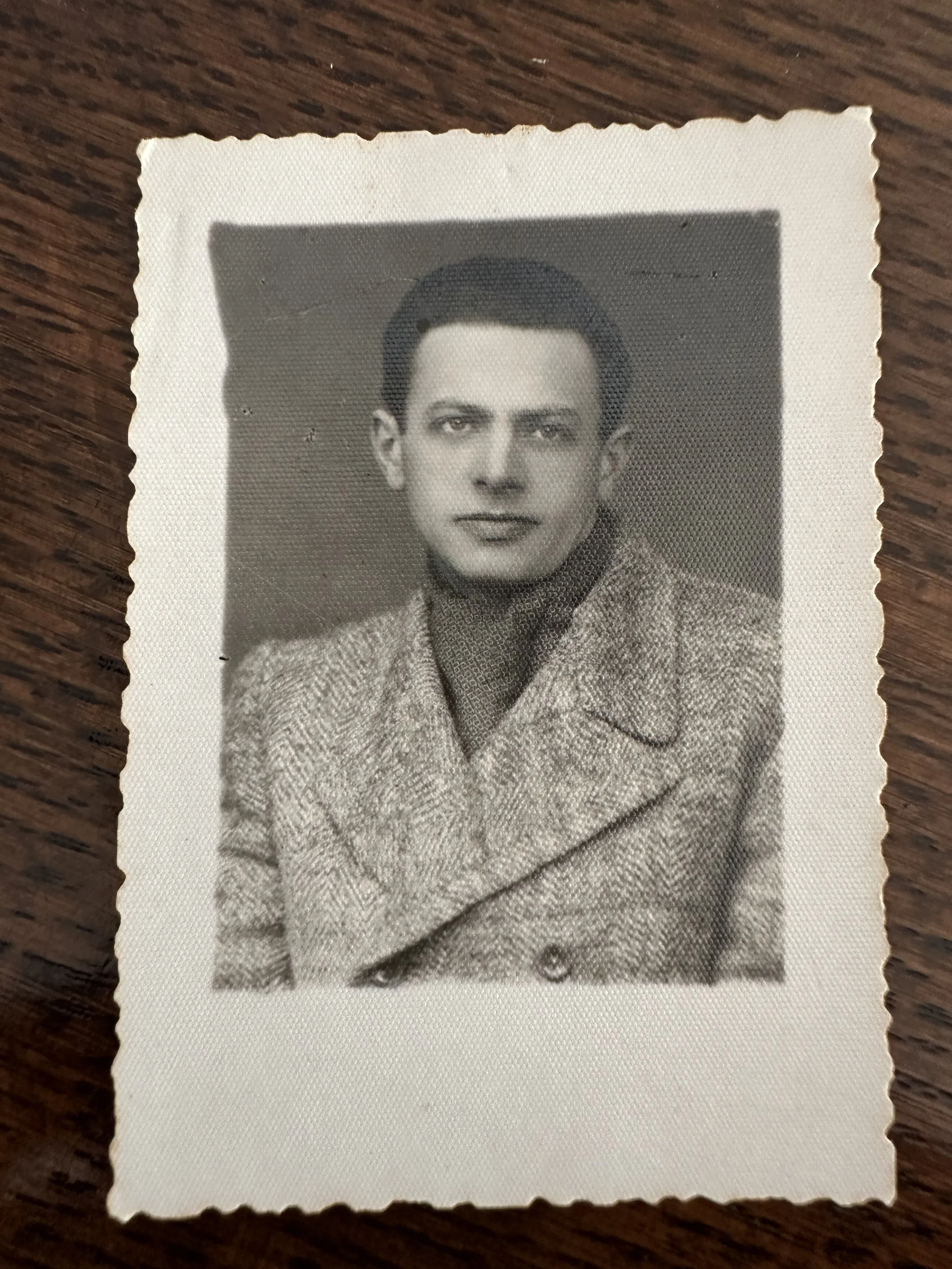
Yehuda Eismann, date unknown. From the collection of Olga R.
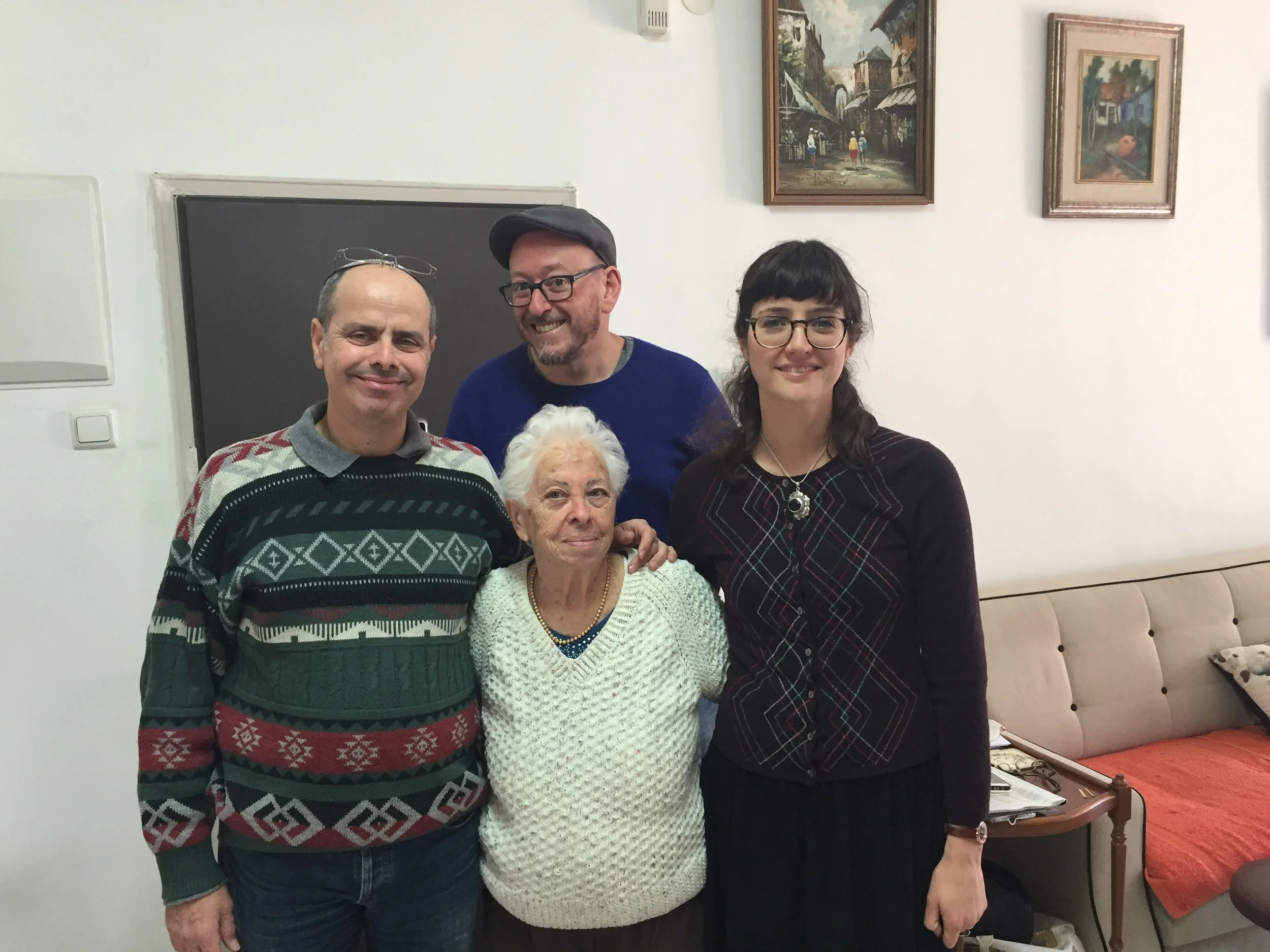
The authors with Sofi Flaysher and Fredi Flaysher in Holon, Israel.
February 2017.
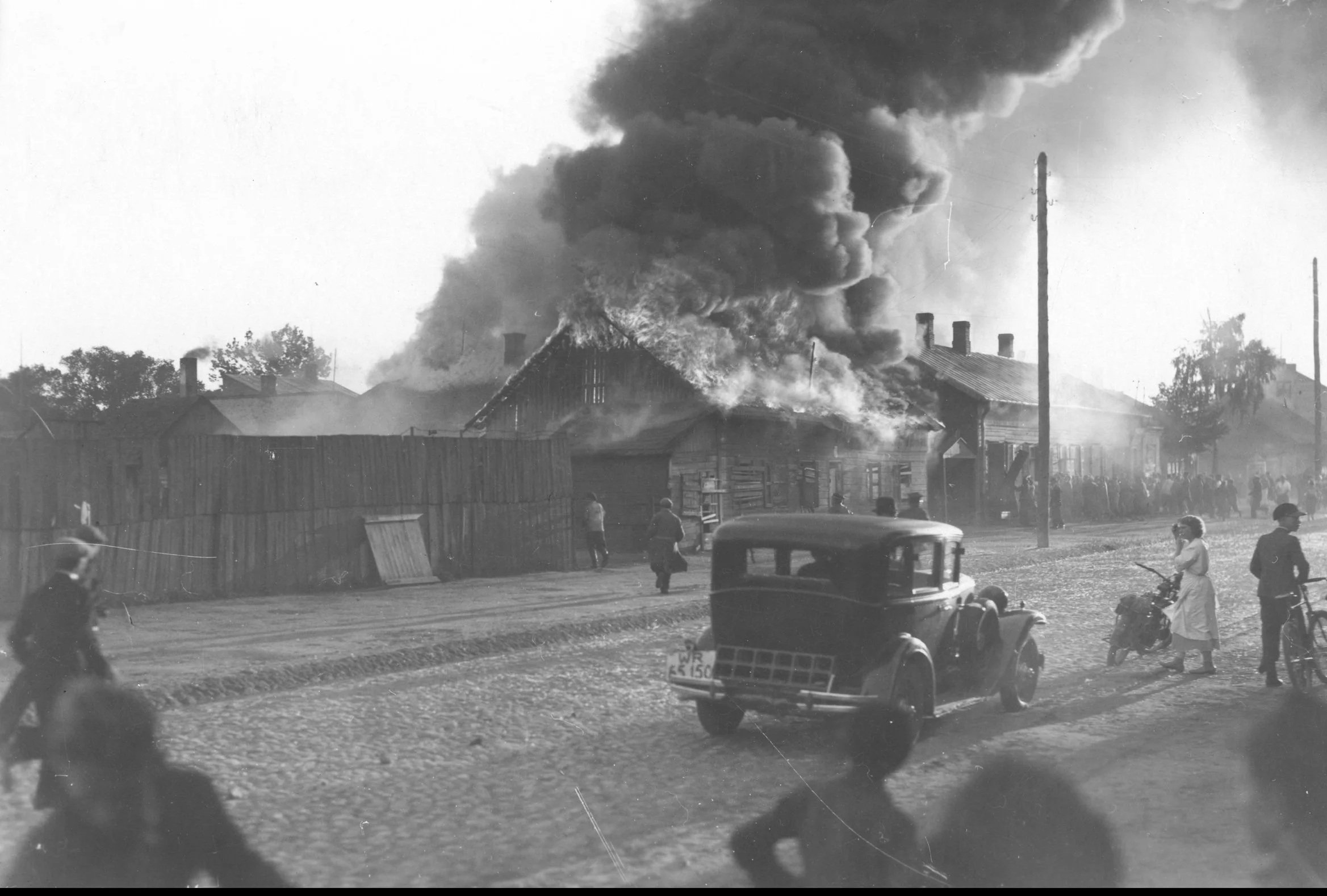
Pogrom in Minsk Mazowiecki - one of many in 1937 that inspired the song “Es Brent”. Photo courtesy Polish National Photographic Archive.
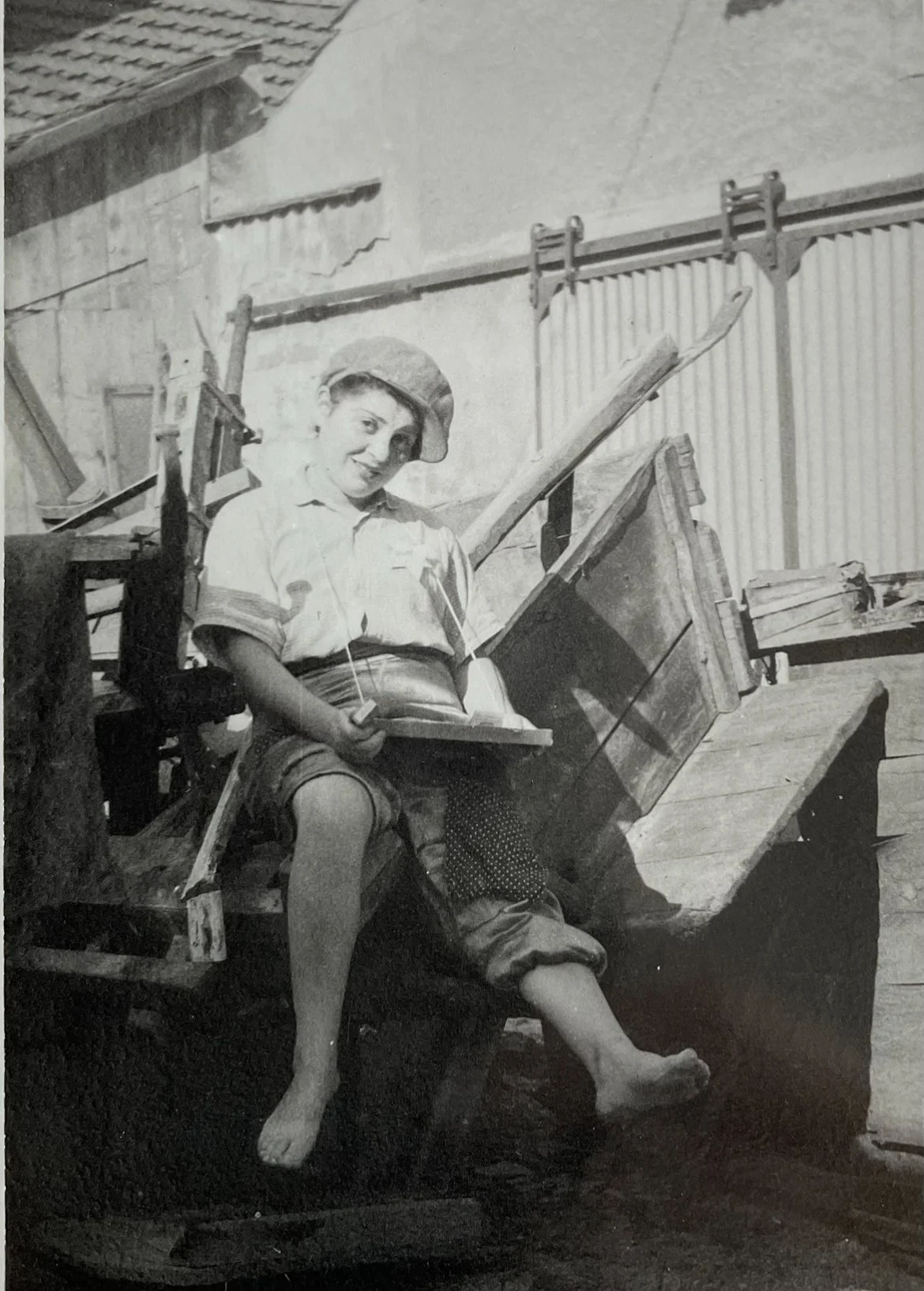
Chayele Rozental playing the orphan ‘Yisrolik’. Photo courtesy of the Rozental family.